
Moroccan kitchen design is a style that is becoming increasingly popular in modern kitchens. It is characterised by vibrant colours, intricate patterns and ornate metallic accents that create an exotic and inviting atmosphere. Moroccan kitchens are designed to transport you to the vibrance of Morocco with a visual feast that engages all your senses.
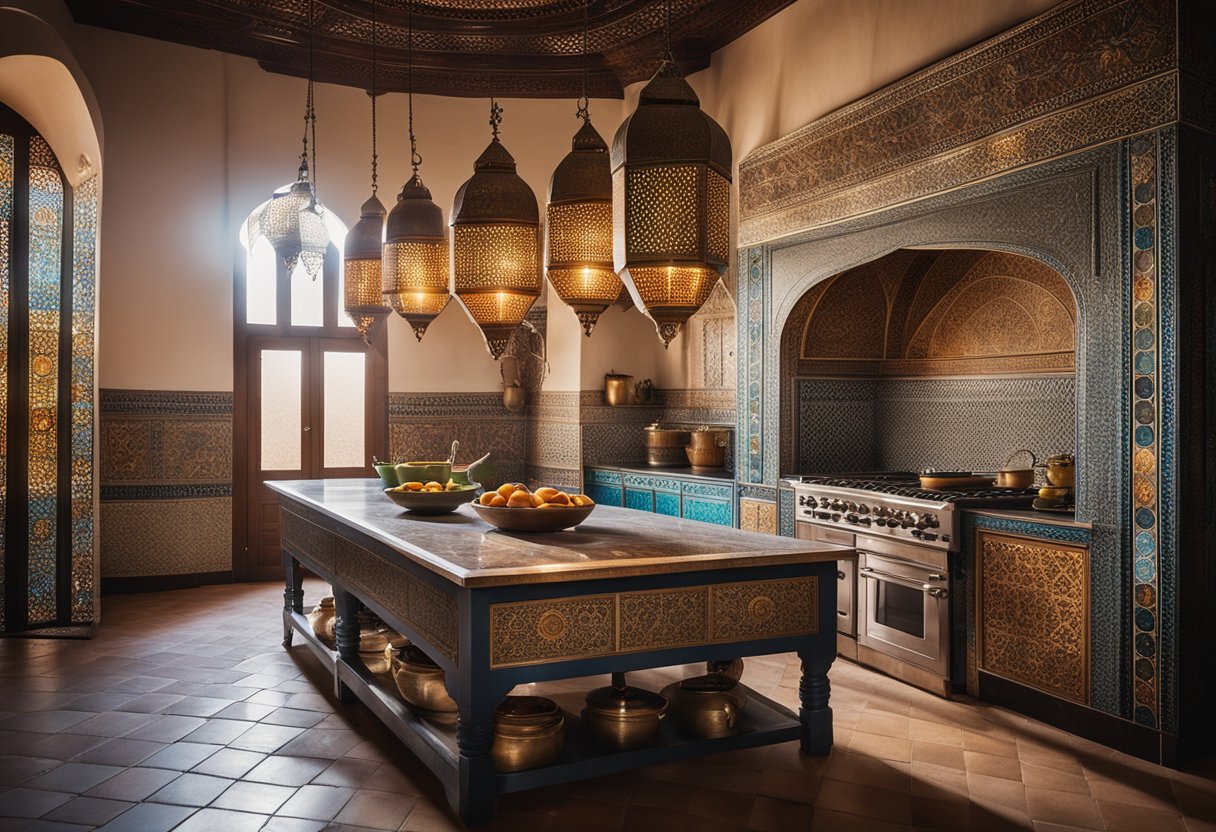
One of the essential elements of Moroccan kitchen style is the use of bold colours. Rich jewel tones like emerald green, royal blue and ruby red are popular choices for walls, cabinets and accents. Neutral colours like beige, cream, white and grey can also be used to create a more understated look. Moroccan kitchen design also incorporates intricate patterns, such as geometric shapes, arabesques and floral motifs, which are often used on tiles, textiles and furniture.
Designing a functional and stylish Moroccan kitchen requires careful consideration of the layout and the use of space. A central island is a common feature in Moroccan kitchens, which can be used for food preparation, dining and socialising. The use of open shelving and glass-fronted cabinets can also create a sense of openness and allow you to display your beautiful dishes and cookware.
Key Takeaways
- Moroccan kitchen design is characterised by vibrant colours, intricate patterns and ornate metallic accents.
- The use of bold colours, intricate patterns and open shelving are essential elements of Moroccan kitchen style.
- A central island and careful consideration of the layout are important for designing a functional and stylish Moroccan kitchen.
Essential Elements of Moroccan Kitchen Style
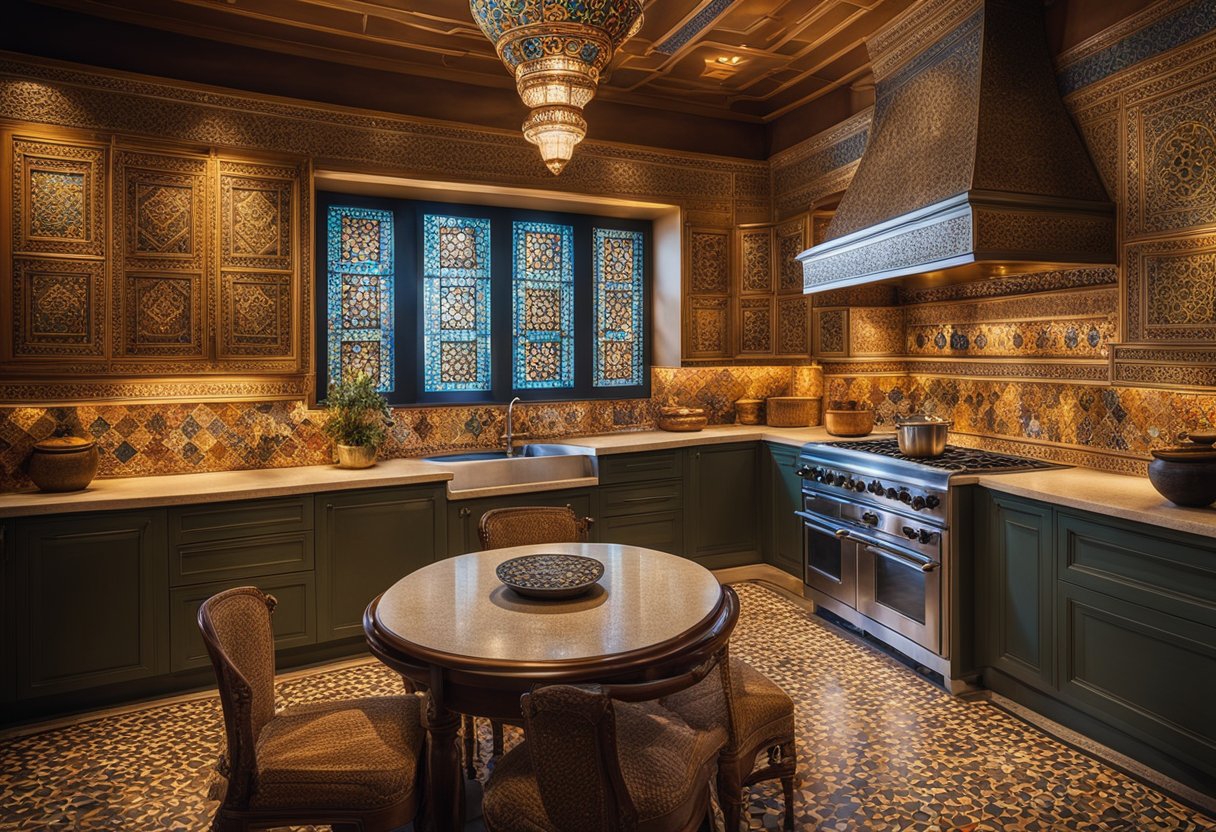
If you want to bring the beauty of Morocco into your kitchen, there are several essential elements you should consider. The Moroccan kitchen style is characterized by a mix of vibrant colours, traditional materials, iconic patterns and textiles, authentic furniture and decor, and unique lighting and accessories. Here are some of the key elements that define Moroccan kitchen style:
Vibrant Colour Palette
One of the most defining elements of Moroccan kitchen style is the use of a vibrant colour palette. While white, gray, and beige are commonly used as a base, Moroccan kitchens often feature bold, bright colours such as turquoise, emerald green, ruby red, and deep blue. These colours are often used in intricate patterns and mosaics, creating a visually stunning effect.
Traditional Moroccan Materials
Moroccan kitchen style is also defined by the use of natural materials such as tile, wood, stone, and ceramic. Terracotta is a particularly popular material, often used for flooring and walls. Moroccan tile is another iconic element of the style, with intricate patterns and geometric shapes that add depth and texture to the space.
Iconic Moroccan Patterns and Textiles
In addition to the use of traditional materials, Moroccan kitchen style is also characterized by the use of iconic patterns and textiles. Moroccan rugs, for example, are often made of wool and feature intricate patterns and bold colours. Throws and runners made of similar materials can be used to add texture and warmth to the space.
Authentic Moroccan Furniture and Decor
To complete the look of a Moroccan kitchen, it’s important to incorporate authentic furniture and decor. Carved woodwork is a common feature, with intricate designs that add depth and texture to the space. Lanterns and pendants made of wrought iron and other metals can be used to create unique lighting effects. Authentic Moroccan furniture such as tables and chairs can also be used to create a cohesive look.
Lighting and Accessories
Finally, lighting and accessories are key elements of Moroccan kitchen style. Moroccan lighting often features intricate designs and patterns, with chandeliers and candles used to create a warm and inviting atmosphere. Accessories such as pottery, ceramics, and other decorative items can be used to add visual interest and texture to the space.
By incorporating these essential elements of Moroccan kitchen style, you can create a unique and inviting space that reflects the beauty and craftsmanship of Moroccan design.
Designing a Functional and Stylish Moroccan Kitchen
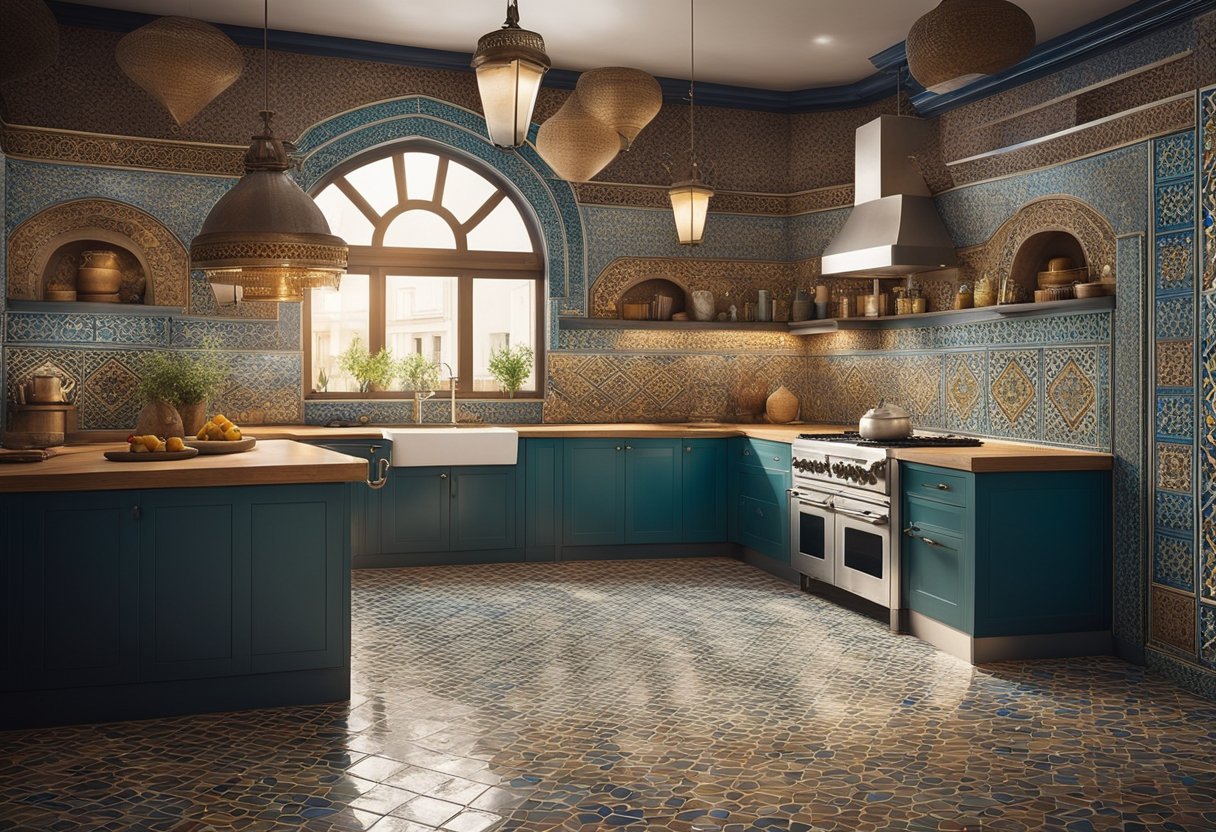
Designing a Moroccan kitchen is all about creating a space that is functional, stylish, and reflects the unique beauty of Moroccan design. With a few key design elements, you can create a kitchen that is both practical and beautiful.
Layout and Storage Solutions
The layout of your kitchen is an important consideration when designing a Moroccan kitchen. Consider incorporating an island or open shelving to provide additional storage and counter space. Cabinets can also be used to create a stylish and functional storage solution. Moroccan kitchen designers often use a mix of cabinets and open shelving to create a unique look that is both functional and stylish.
Selecting Appliances and Fixtures
When selecting appliances and fixtures for your Moroccan kitchen, consider stainless steel appliances for a modern touch. A range hood can also be used to add a touch of Moroccan style to your kitchen. For the sink area, consider a farmhouse sink and shaker cabinets for a classic look. Moroccan-style kitchen ideas often incorporate brass hardware and fixtures to add a touch of elegance and sophistication.
Details That Make a Difference
When it comes to designing a Moroccan kitchen, it’s the details that make all the difference. Consider incorporating a backsplash with Moroccan-inspired tile or patterns. For the countertop, consider a natural stone or marble. Moroccan design often incorporates bold colours, so don’t be afraid to use bright and bold hues to add a touch of personality to your kitchen. Finally, consider adding a few furniture pieces, such as a vintage tea kettle or coffee pot, to complete the look of your custom home Moroccan kitchen.
With these design elements in mind, you can create a Moroccan kitchen that is both functional and stylish. Whether you’re a professional designer or simply looking to update your kitchen, Moroccan-style kitchen ideas can help you create a space that is uniquely yours.
Frequently Asked Questions
What are the quintessential colour schemes for a vibrant Moroccan-style kitchen?
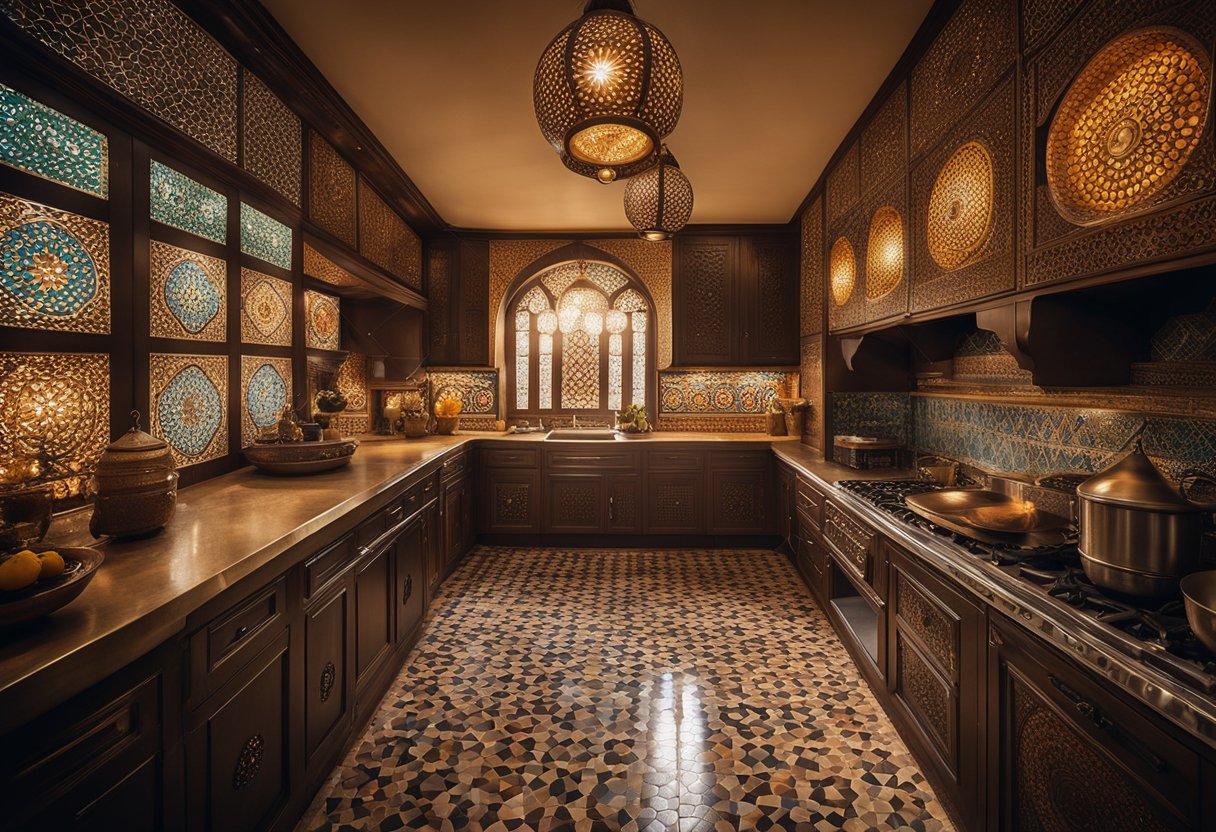
Moroccan kitchens are known for their bold and vibrant colour schemes. The quintessential colours for a Moroccan-style kitchen include rich shades of blue, green, yellow, and orange. These colours can be used on walls, cabinets, and accessories to create a warm and inviting atmosphere. Consider pairing these colours with neutral shades such as beige or cream to balance the vibrancy.
How can one incorporate traditional Moroccan tiles into a contemporary kitchen setting?
Traditional Moroccan tiles, also known as zellige tiles, are a hallmark of Moroccan design. These tiles feature intricate geometric patterns and are often brightly coloured. To incorporate these tiles into a contemporary kitchen setting, consider using them as a backsplash or accent wall. Pair them with modern appliances and minimalist cabinets to create a striking contrast.
What essential accessories should one include to capture the essence of a Moroccan kitchen?
To capture the essence of a Moroccan kitchen, consider incorporating accessories such as Moroccan tea glasses, tagines, and hand-woven textiles. These accessories are not only functional but also add a touch of traditional Moroccan style to the kitchen. Additionally, consider adding a decorative mosaic tile tabletop or a Moroccan-inspired light fixture to complete the look.
Could you suggest some ideas for integrating Moroccan design elements into a modern kitchen layout?
Integrating Moroccan design elements into a modern kitchen layout can be achieved by incorporating bold colours, geometric patterns, and traditional accessories. Consider using Moroccan tiles as a backsplash or accent wall, adding a Moroccan-inspired light fixture, and incorporating traditional accessories such as tea glasses and tagines. Additionally, consider using bright colours such as blue, green, and yellow on walls and cabinets to create a bold and vibrant look.
What are the defining characteristics of traditional Moroccan kitchen decor?
Traditional Moroccan kitchen decor is characterised by bold colours, intricate geometric patterns, and traditional accessories. Moroccan kitchens often feature brightly coloured walls and cabinets, zellige tiles, and hand-woven textiles. Additionally, traditional accessories such as Moroccan tea glasses and tagines are commonly used in Moroccan kitchens.
How does one blend modern amenities with the Moroccan decorating style in a kitchen renovation?
Blending modern amenities with the Moroccan decorating style in a kitchen renovation can be achieved by incorporating modern appliances and minimalist cabinets with traditional Moroccan design elements. Consider using zellige tiles as a backsplash or accent wall, adding a modern light fixture, and incorporating traditional accessories such as tea glasses and tagines. Additionally, consider using neutral shades such as beige or cream to balance the bold colours commonly used in Moroccan design.