
Stonehenge renovations have been ongoing for decades, as conservationists strive to preserve the historical significance of this ancient monument. The prehistoric site, located on Salisbury Plain in England, has been a source of fascination for centuries. The monument consists of a ring of standing stones, each weighing several tons, arranged in a circular pattern.
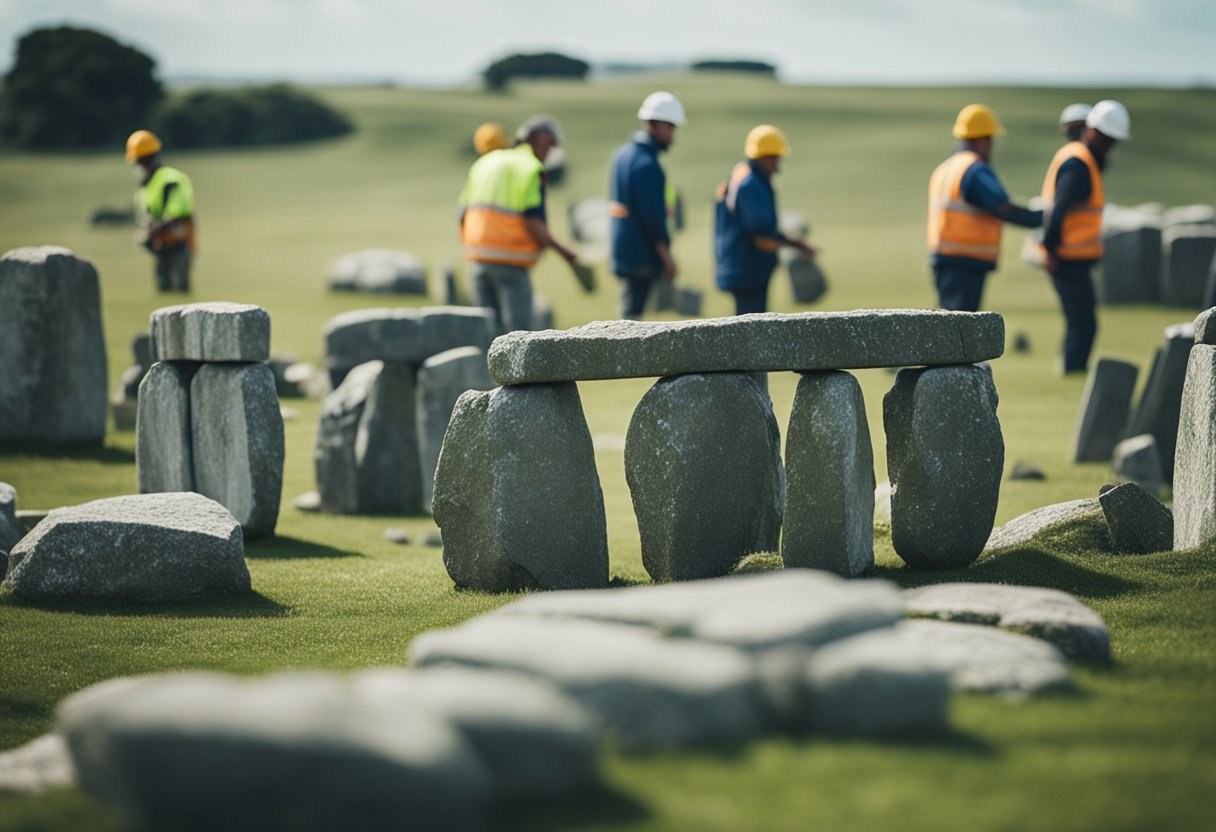
The history of Stonehenge dates back over 5,000 years, and it is believed to have been used for a variety of purposes by prehistoric people. Scholars have determined that there was a very long process of construction and use of Stonehenge, with many additions and alterations made to the site during three distinct phases of building and renovation. Today, Stonehenge is one of the most famous ancient monuments in the world, attracting visitors from all over the globe.
Key Takeaways
- Stonehenge is an ancient monument located on Salisbury Plain in England.
- The history of Stonehenge dates back over 5,000 years, and it is believed to have been used for a variety of purposes by prehistoric people.
- Ongoing renovations are being carried out to preserve the historical significance of this iconic site.
Historical Significance and Ongoing Conservation
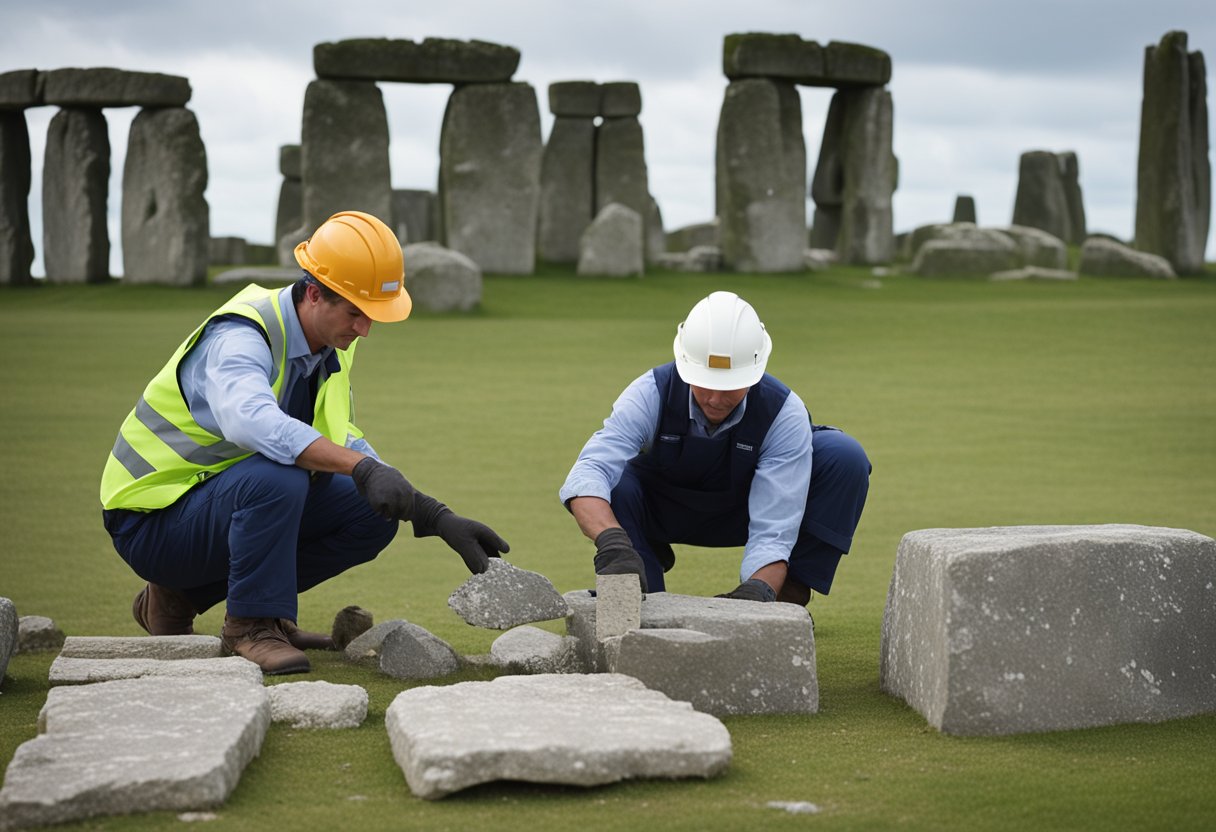
Stonehenge is a prehistoric monument in Wiltshire, England, and one of the most famous landmarks in the world. The monument is believed to have been built in three phases, starting around 3000 BC. The site includes the sarsen circle, bluestones, and lintel stones, among other features.
The Story of Stonehenge
The history of Stonehenge is shrouded in mystery, and many theories exist about its purpose and use. Some believe it was a place of worship, while others think it was a burial site or a healing centre. The bluestones are believed to have been brought from Wales, while the sarsen stones were sourced locally.
Modern Restoration Efforts
Over the years, Stonehenge has undergone several restoration and conservation projects to preserve the monument for future generations. In the late 19th century, William Hawley carried out excavations and restoration work at the site. Richard Atkinson and Stuart Piggott also made significant contributions to the study of Stonehenge in the 20th century.
Challenges and Solutions in Renovation
One of the biggest challenges in renovating Stonehenge is the preservation of the monument’s integrity while ensuring visitor safety. To address this, English Heritage has employed a team of specialist conservators, engineers, and architects to carry out conservation work.
The recent renovation work at Stonehenge involved the replacement of degraded cement mortar with breathable lime mortar. The use of lime mortar is expected to reduce the risk of erosion caused by weather conditions such as rain and wind.
The Future of Stonehenge
The ongoing conservation project at Stonehenge is expected to continue for several years. The project involves the use of laser scans and other advanced technologies to monitor the monument’s condition and identify areas that require attention.
Stonehenge in the Public Eye
Stonehenge is a popular tourist attraction, attracting millions of visitors each year. The monument is also featured on a £2 silver coin issued by the Royal Mint.
Technical Aspects of the Stonehenge Renovations
The recent renovation work at Stonehenge involved the use of scaffolding to access the lintel stones and trilithons. The conservators also used laser scans to identify cracks and joints in the stones. The sarsen stones were secured with concrete foundations, and the gaps between the stones were filled with a breathable lime mortar.
In conclusion, Stonehenge is an important cultural and historical site that requires ongoing conservation efforts to preserve its integrity for future generations. The recent renovation work at the site is an engineering project that involves the use of advanced technologies and specialist skills.
Frequently Asked Questions
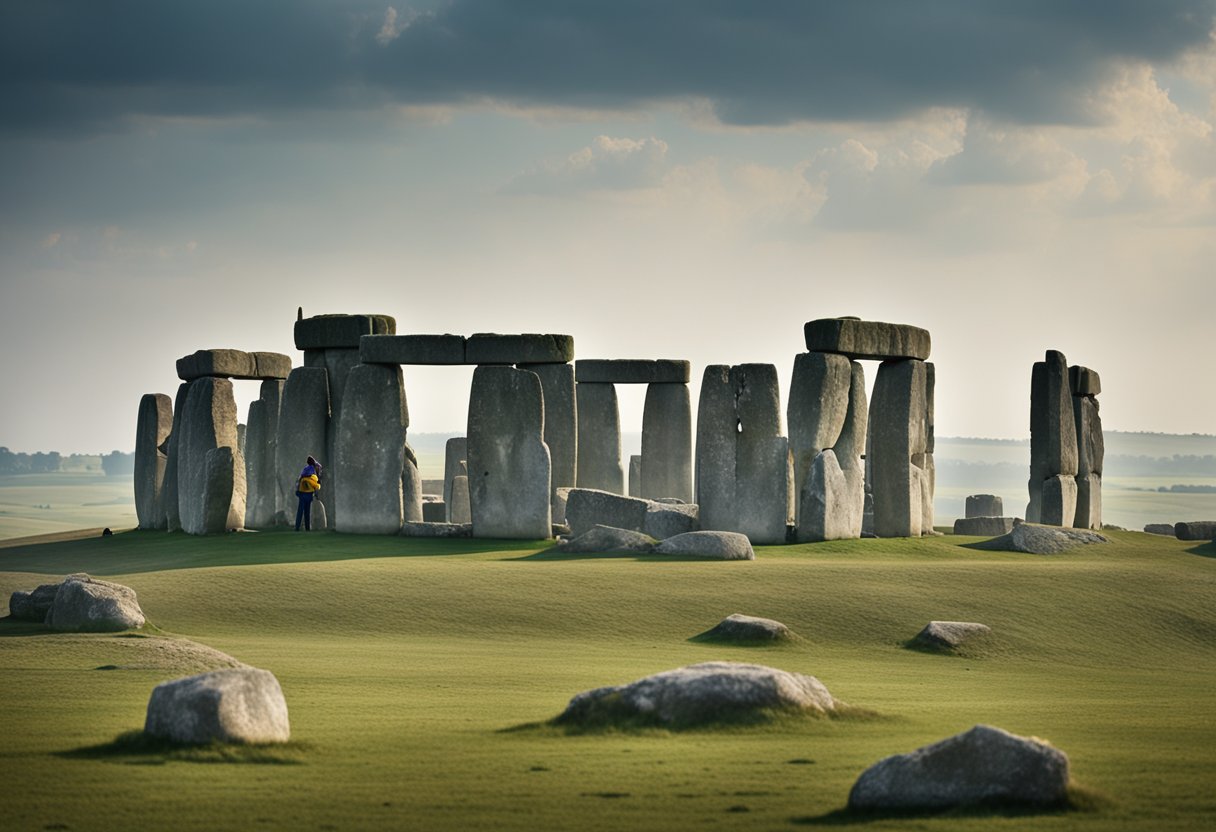
What are the most striking differences in Stonehenge’s appearance post-renovation?
The most striking difference in Stonehenge’s appearance post-renovation is the removal of the unsightly scaffolding that had been in place for years. Stonehenge now looks more like its original self, with the stones standing tall and proud. The renovation also involved cleaning the stones, which has made them appear brighter and more vibrant.
Where can one find photos showcasing the progress of Stonehenge’s renovations?
You can find photos showcasing the progress of Stonehenge’s renovations on the Smithsonian Magazine website. The website has a collection of images that show the various stages of the renovation process.
How did the 1919 reconstruction efforts alter the state of Stonehenge?
The 1919 reconstruction efforts at Stonehenge involved re-erecting some of the fallen stones and restoring the lintels. This reconstruction altered the state of Stonehenge by making it more stable and secure. However, some experts argue that the reconstruction was not entirely accurate and that it may have altered the original design of the monument.
In what ways did Victorian efforts contribute to the current structure of Stonehenge?
Victorian efforts contributed to the current structure of Stonehenge by stabilising the stones and preventing further collapse. In 1901, the leaning stone known as the “Slaughter Stone” was straightened and set in concrete. The Victorian restoration efforts also involved replacing missing stones with concrete replicas.
What prompted the restoration of Stonehenge in the early 20th century?
The restoration of Stonehenge in the early 20th century was prompted by concerns about the stability of the monument. The stones had been gradually tilting and collapsing over the years, and there were fears that the monument would eventually collapse entirely. The restoration efforts aimed to stabilise the stones and prevent further damage.
Has Stonehenge undergone any significant repairs or reconstructions in recent years?
Stonehenge underwent significant repairs in 2020, with conservators focusing their attention on Stone 122, a lintel piece that fell and cracked in 1900. The repairs involved removing the cracked lintel and replacing it with a new one. This was the first time in decades that Stonehenge had undergone repairs, and it has helped to ensure the monument’s long-term stability.